
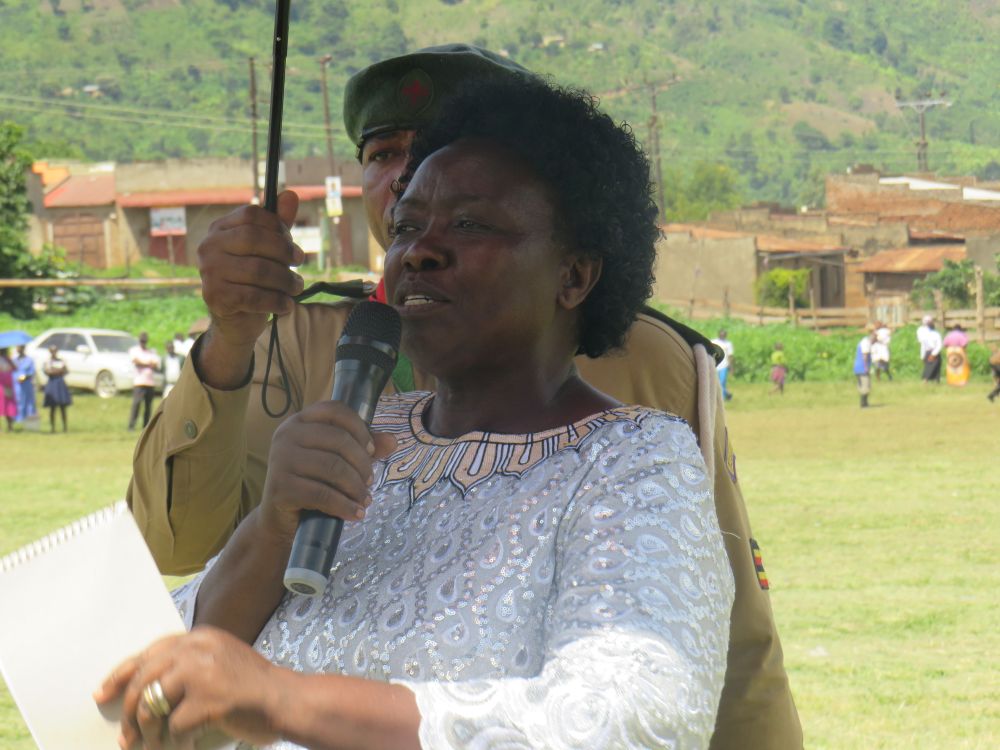
A strong call to confront violence, expand economic opportunities, and prioritize girls’ education took center stage in Kasese District as keynote speaker Aidoloi Syauswa delivered a powerful address during Women’s Day celebrations held on March 31, 2026, at Ngaiga Primary School playground in Maliba Town Council.
Speaking under the theme “Scaling up investment to accelerate access to justice for all women and girls in Uganda,” Syauswa challenged leaders, families, and communities to take deliberate action in addressing the systemic barriers that continue to hold women back.
In a speech that resonated with many, she highlighted various forms of violence affecting women—emotional, physical, and economic—describing them as deeply rooted challenges that require urgent and sustained intervention.
“Violence against women is not only physical. Many women are suffering silently through emotional and economic control,” she said.
Syauswa pointed out that despite women’s significant contributions to household incomes, many remain excluded from financial decision-making and ownership of property. She described this imbalance as a form of economic injustice that undermines women’s independence and dignity.
“In many homes, women work tirelessly to support their families, yet they have little control over resources. This must change if we are to achieve true empowerment,” she emphasized.
At the heart of her message was the importance of education as a transformative tool. She urged parents and guardians to invest in girls’ education, noting that keeping girls in school is one of the most effective ways to break cycles of poverty and inequality.
“When you educate a girl, you empower a nation. Education gives women the ability to stand up for their rights and contribute meaningfully to society,” she said.
Syauswa also called for stronger community awareness and enforcement of laws that protect women and girls, stressing that access to justice must go beyond policy and be felt at the grassroots level.
Her message aligned with broader calls from leaders at the event, including the chief guest, Kabyanga Godfrey Kime, who urged leaders to ensure women benefit from government programs, and district chairperson Muhindi Bukombi Eliphaz, who emphasized the need to combat child abuse.
However, it was the keynote address that set the tone for the day placing the lived experiences of women at the center of the conversation and challenging stakeholders to act with urgency.
As the celebrations unfolded with cultural performances, community sensitization, and a football match aimed at inspiring young girls, Syauswa’s message remained a guiding thread: real change will only come when communities confront inequality head-on and invest meaningfully in the empowerment of women and girls.
Her speech served not just as an address, but as a call to action one that left leaders and residents alike reflecting on their role in building a more just and equitable society.