
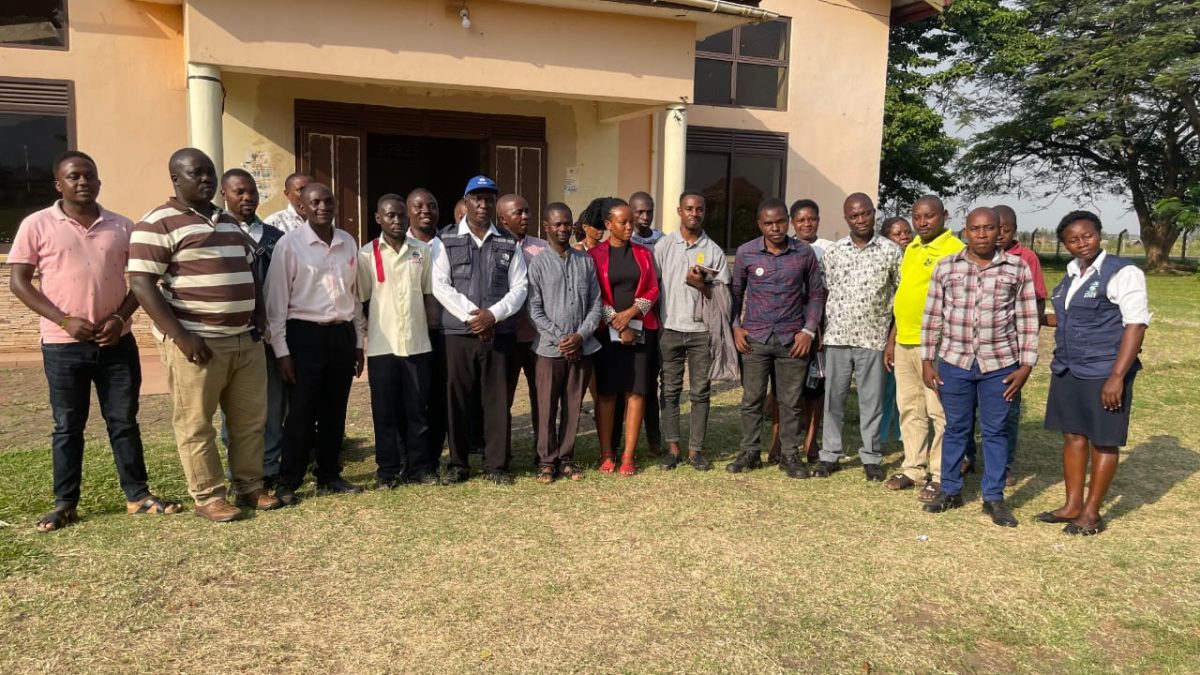
On 23rd June 2026, as part of efforts to strengthen preparedness against possible disease outbreaks, Kasese District Local Government (KDLG) trained journalists on responsible reporting of Ebola and other infectious diseases to ensure communities received accurate and timely information.
During the one-day media training held at the Multipurpose Hall in Rukoki Ward, Nyamwamba Division of Kasese Municipality, district officials cautioned journalists against rushing to publish unverified information concerning suspected Ebola cases, urging them to rely on confirmation from authorized health authorities.
The engagement, organized by Kasese District Local Government in partnership with Enabel, brought together members of the Kasese District Ebola Taskforce, including the Senior District Health Educator and her team, representatives from Médecins Sans Frontières (MSF), and the World Health Organization (WHO) field representative.
Speaking during the training, Agnes Mbambu the District Senior Health Educator emphasized that accurate and timely reporting was an important part of strengthening outbreak preparedness because the media played a key role in guiding communities during public health emergencies.
In a bid to improve disease outbreak communication, the officials encouraged journalists to verify information before publication, noting that premature reports about suspected cases could create unnecessary fear and anxiety among the public.
The training came at a time when Kasese District was continuing to strengthen its surveillance and response systems due to its location along the border with the Democratic Republic of Congo (DRC), a country that has experienced multiple Ebola outbreaks.
Despite the district’s proximity to the DRC and the presence of several porous border points, health authorities reported that Kasese had not registered any Ebola case, although more than 41 suspected cases had been investigated and all tested negative.
According to district health officials, continued collaboration between health workers, journalists, community leaders, and residents was critical in maintaining vigilance and ensuring early detection and response in case of any disease threat.
For families and communities living in border areas, access to verified health information remained an important tool in reducing misinformation, encouraging early reporting of symptoms, and promoting confidence in public health interventions.
As preparedness efforts continued, Kasese District authorities called on journalists and the wider community to remain partners in protecting the district against infectious disease outbreaks through accurate information sharing and public awareness.
The end.